
Research compounds · Published lab certificates
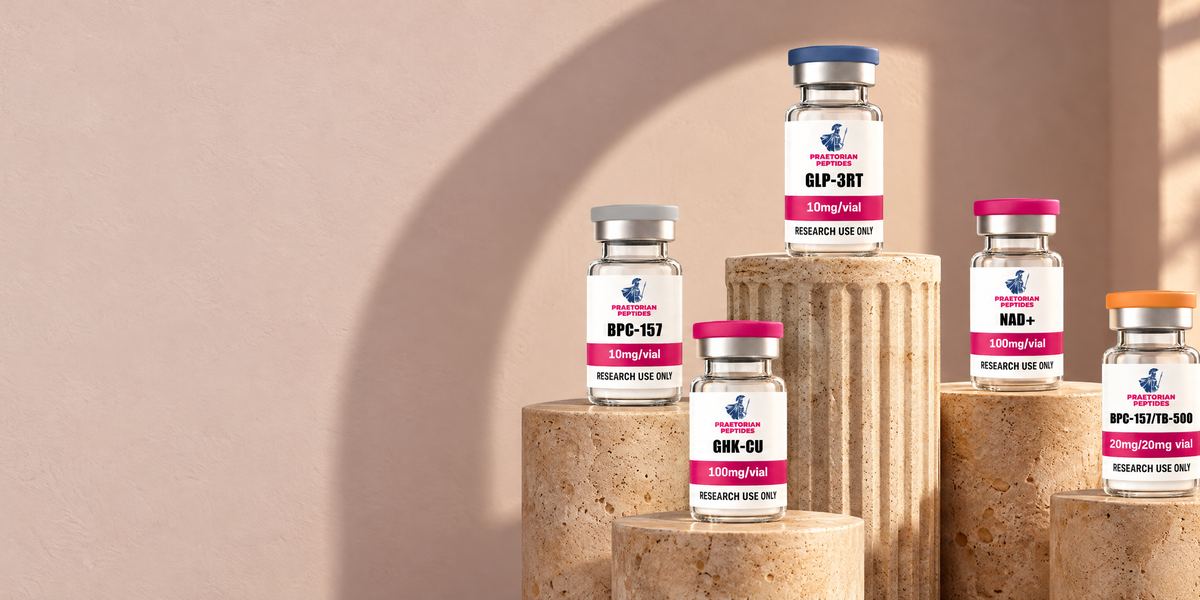
Lyophilized research compounds for qualified laboratories. Every lot is tested by an independent US laboratory and published with the accession number the lab issued, so the report can be verified at the source.
For laboratory research use only. Not for human or veterinary use.
How verification works
A certificate is only worth something if you can check it against the laboratory that wrote it. Here is the whole chain, step by step.
Lots are sent to a US laboratory we do not own. Purity is measured by HPLC-UV and identity is confirmed by mass spectrometry.
Each certificate carries the accession number and search code the laboratory issued, so the report can be checked at the source.
Open the certificate, then look the accession number up on the laboratory website. The two should match line for line.
Vials ship as sealed lyophilized powder with tracking, processed in 1 to 2 business days. Orders over $150 ship free.
What a certificate reports
High-performance liquid chromatography separates the compound from synthesis by-products. Purity is the main peak as a share of total peak area.
The measured mass-to-charge peaks must match the expected molecule. This confirms the vial holds what the label says.
The measured milligrams in the vial, reported against the label claim, so overfill and underfill are visible.
The lyophilized cake is inspected and recorded, for example a white or blue powder, before the report is signed.
Handling and storage
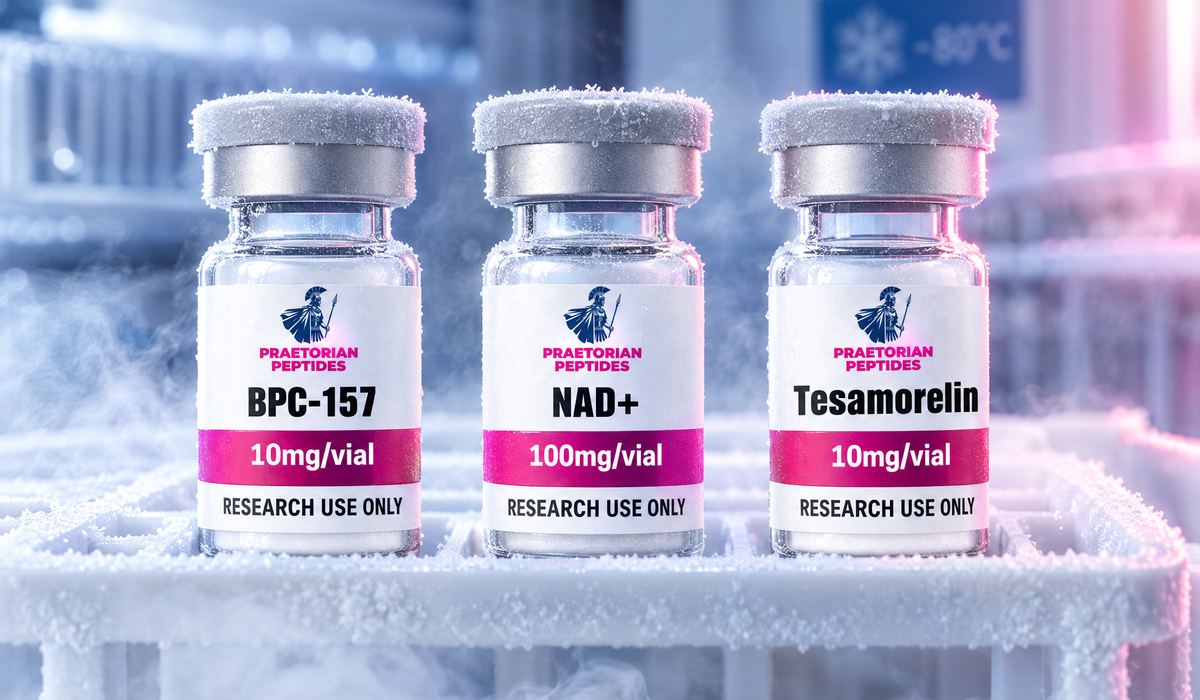
Freeze-drying turns a fragile solution into a stable dry solid. The cake in the vial should be intact and dry on arrival. Keep sealed vials at -20°C and away from light, and only reconstitute at the bench, right before use in your assay.
Red flags when sourcing: recycled certificates, identical chromatograms across lots, missing lot numbers, and suppliers who talk about people instead of experiments.
First order
Drop your email and the code is yours. Lab results and restock notes, no spam.
WELCOME10. Use it at checkout on your first order.For laboratory research use only. Unsubscribe any time.
Why Praetorian
The Praetorian Guard were chosen for one job: be accountable. We run the catalog the same way. A short list of compounds, sealed and lyophilized, with the paperwork published where you can check it.
See our published lab results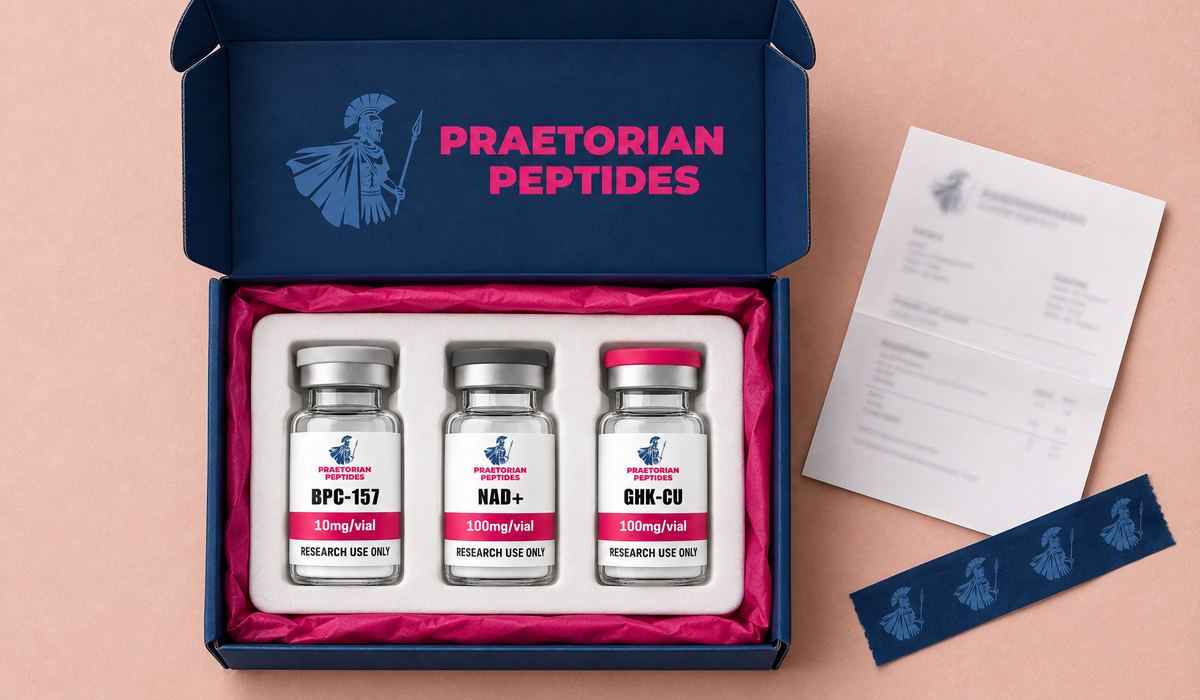
Questions
Our compounds are sold to adults 21 and over for in-vitro research and laboratory development only. They are not for human or veterinary use.
Every published certificate is on our lab results page, with the accession number and search code you can check on the testing laboratory's own website.
Orders are processed within 1 to 2 business days and ship with tracking. Orders over $150 ship free.
Keep sealed, lyophilized vials at -20°C and away from light. Reconstitute only at the bench, right before use.